Maath Pita Temple
मात-पिता मंदिर
The world's first idol-free temple, dedicated to the worship of one's own living and departed parents.
The purpose
The Maath Pita Temple stands on a single conviction: that the highest form of worship a human being can offer is to their own mother and father. Every prayer, every chant, every act of seva performed within these walls is dedicated not to a stone deity but to living and departed parents — the first gods every one of us knew.
There are no idols inside. There are no priests standing between you and your parents. What there is: a Sankalp register where you name the parents you wish to honour, a chanting hall where those names are called out on the date you choose, and a Wall of Honor where their names appear publicly for the day their Sankalp is fulfilled.
The motivation
The temple was founded on the belief that Indian society, in its rush to worship the abstract, has quietly stopped honouring the concrete. Elderly parents are left behind. Anniversaries pass unmarked. Punya Tithis fade into memory. The Dham was built to reverse that — to give every family a place to formally, publicly, ceremonially remember the two people to whom they owe their entire life.
{Founder's origin story — a short paragraph on the founder's personal journey that led to establishing the Dham. To be supplied by the trust.}
The name says everything: Maath Pita first, Gau Mata alongside, all three under one roof at a single mahateerth.
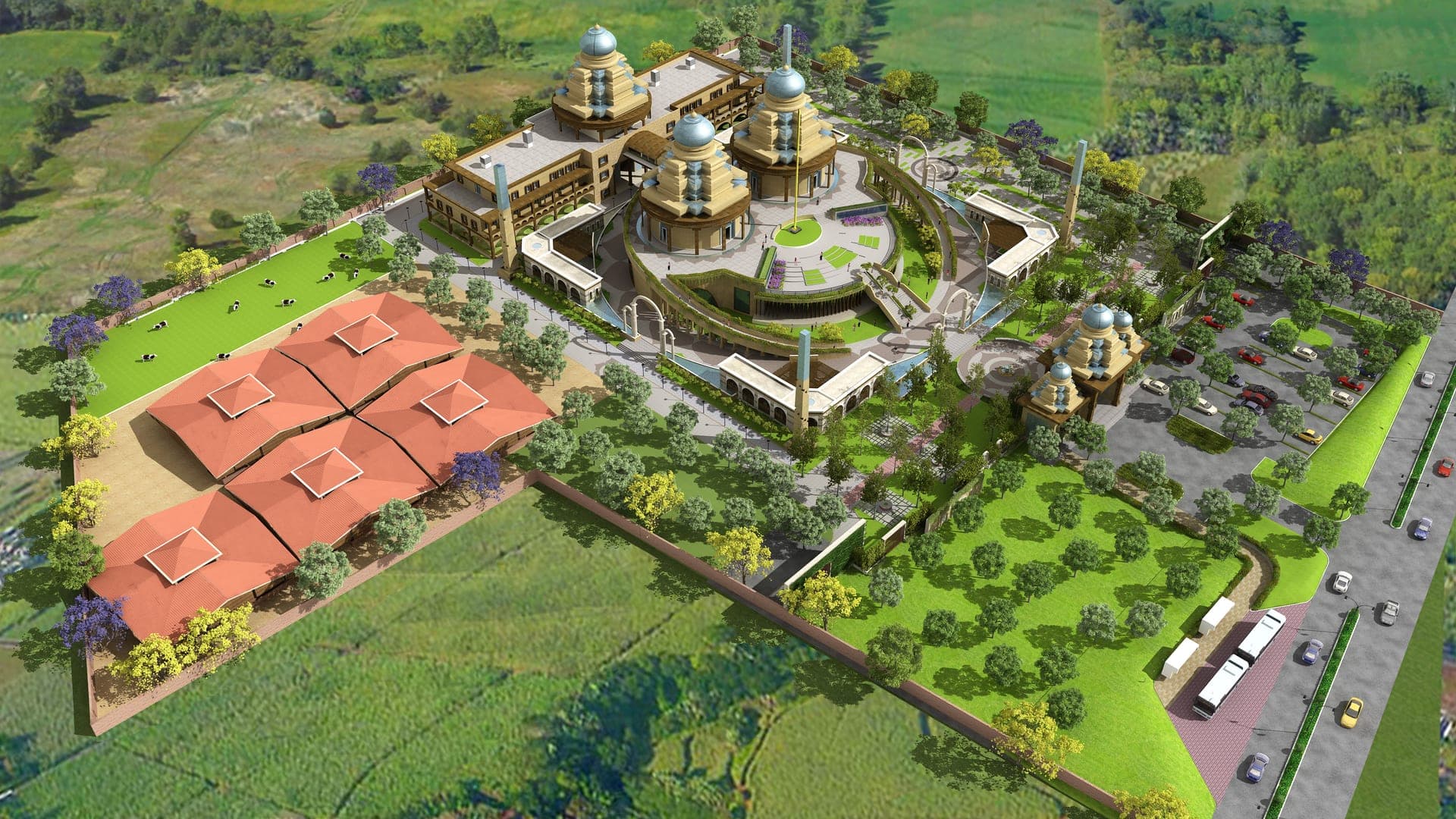
The Mahateerth campus is organised around ten numbered blocks, each dedicated to a specific form of seva. Together they form the working body of the Dham.
1. Maat Pitah Temple
The central idol-free temple where daily Sankalps are chanted. Every registered parent name is called out on the date the donor chose.
2. Shri Hari Temple
The Shri Hari (Vishnu) sanctuary adjoining the main hall — the traditional devotional counterpart to the Maat Pitah temple.
3. Swaran Sandhya Building
The Golden Hours block — a residence and care space honouring elderly devotees and residents at the Dham.
4. Kitchen
The temple kitchen where Bhandara prasadam is prepared for community distribution.
5. Public Wash Rooms (×2)
Two public restroom blocks located along the primary visitor circulation path.
6. Deep Stambh (×4)
Four lamp pillars marking the four cardinal directions of the sacred precinct — the deep flame that greets every visitor.
7. Satsang Hall (Ground Floor)
The satsang hall at ground level, hosting discourses, kirtan, and community gatherings.
8. Display & Retail Area
A dedicated space for the Dham's publications, prasad, and devotional retail — near the visitor parking.
9. Bhandara Hall (Lower Level)
The community dining hall beneath the temple plaza, used for occasional Bhandaras and community gatherings.
10. R&D Area
The research and development block — reserved for ongoing spiritual and educational programmes of the trust.
Facts as of · August 2026
The temple's own journey
From an empty plot in 2011 to today's construction — the milestones that shaped this Mahateerth.
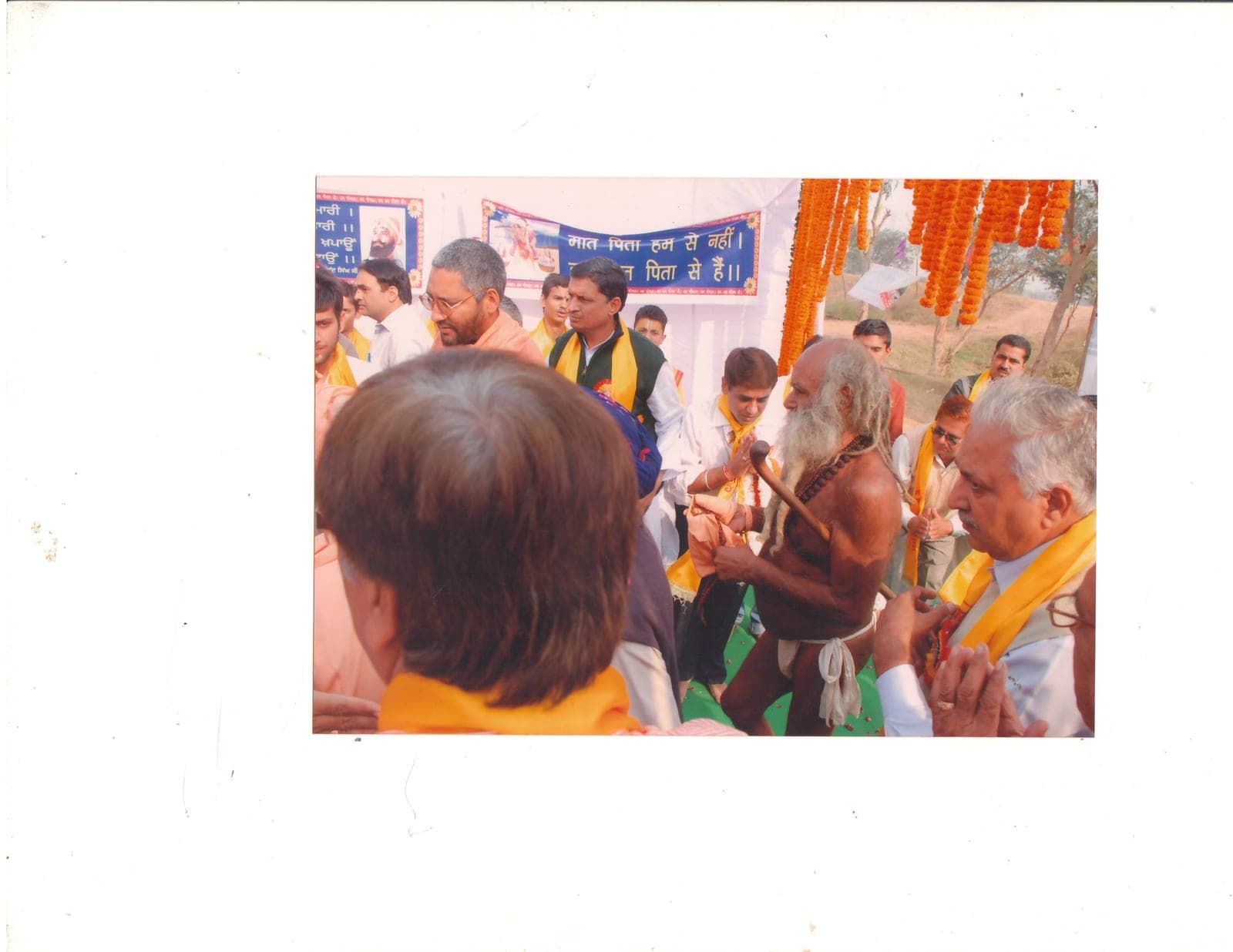
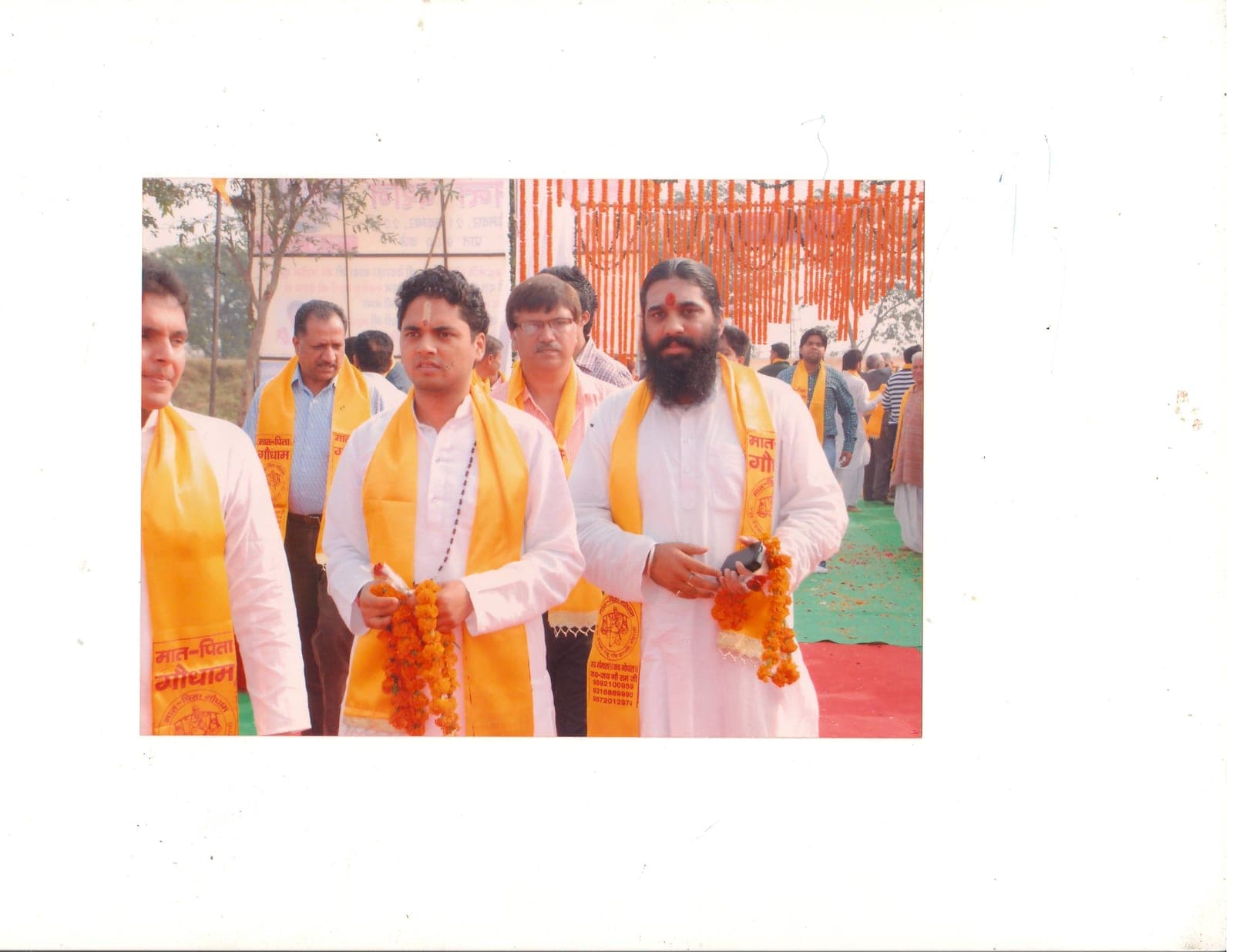
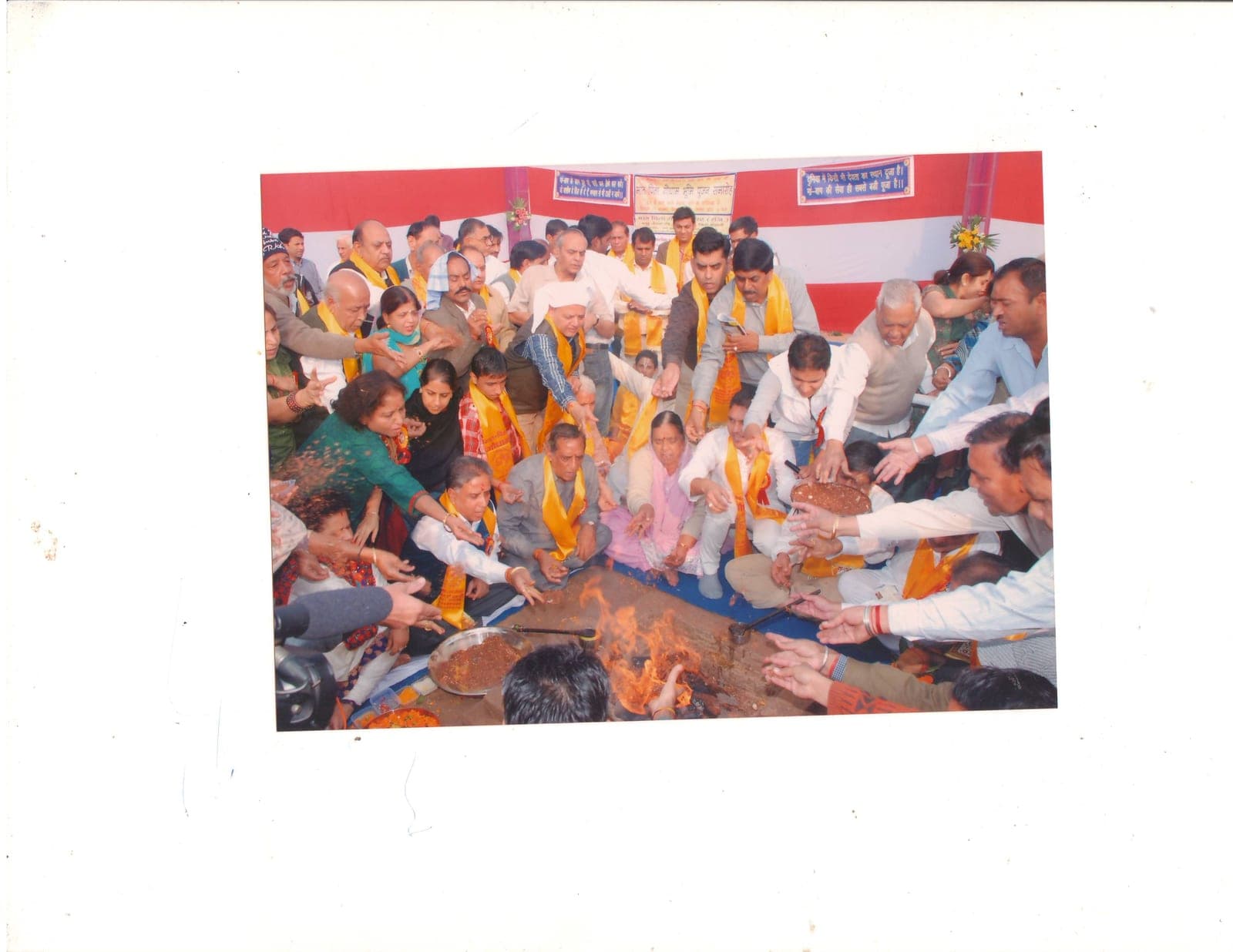
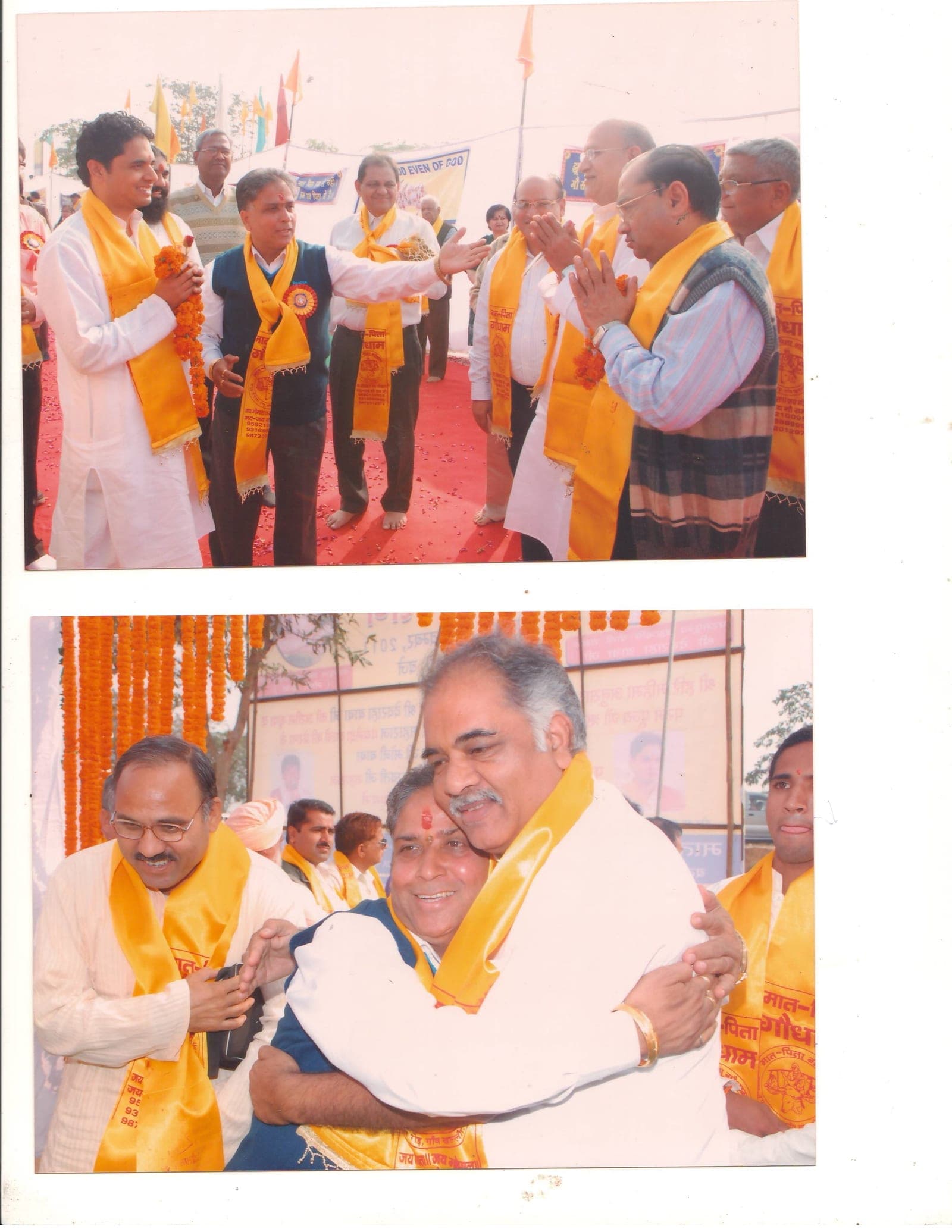
21 Nov 2011
Bhoomi Pujan — the ground is broken
Saints from across India gather at Village Khallour to bless the site. Not a single cow yet stands here. Gau Rishi Swami Dattasharnanandjee attends.
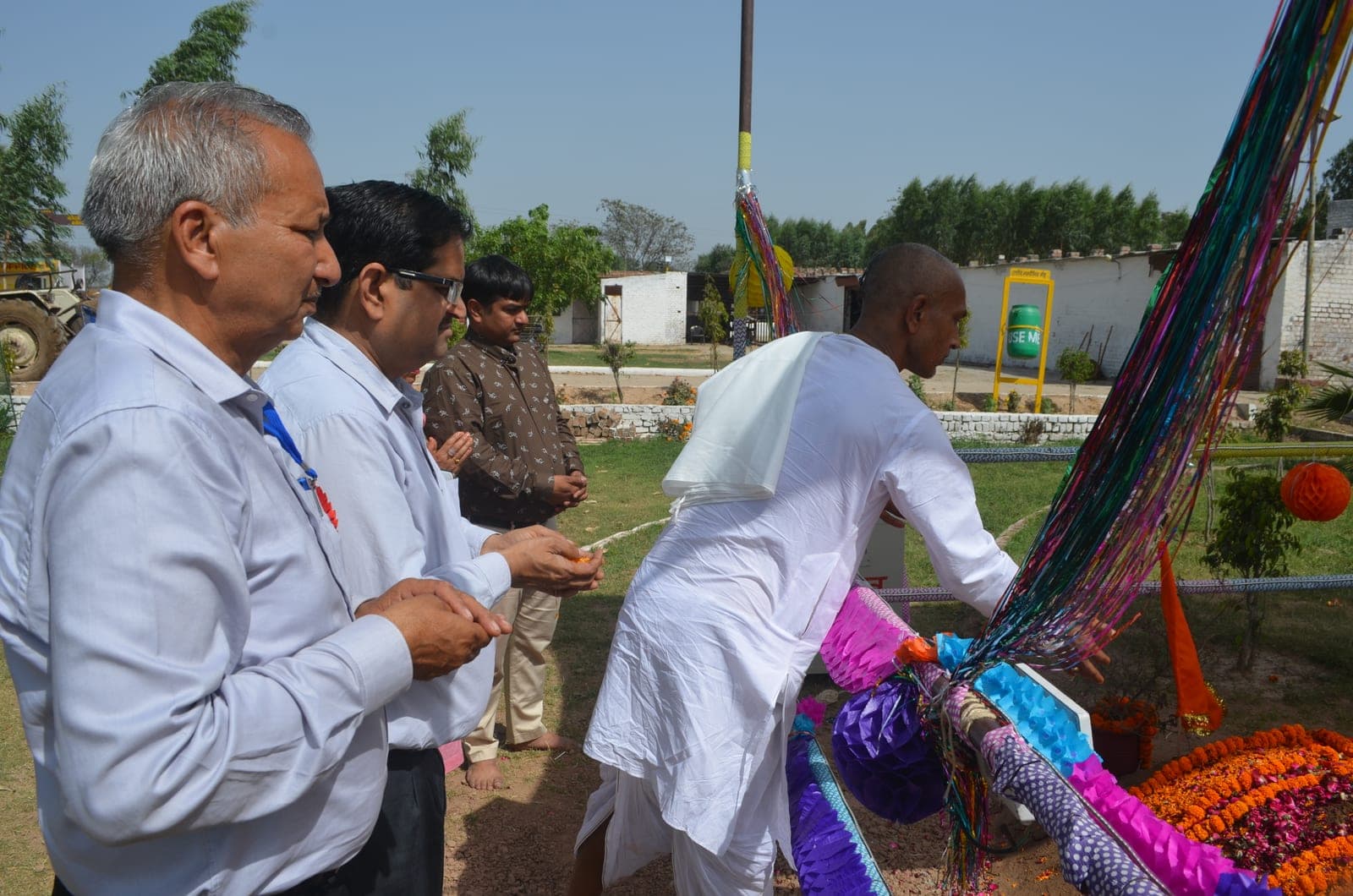
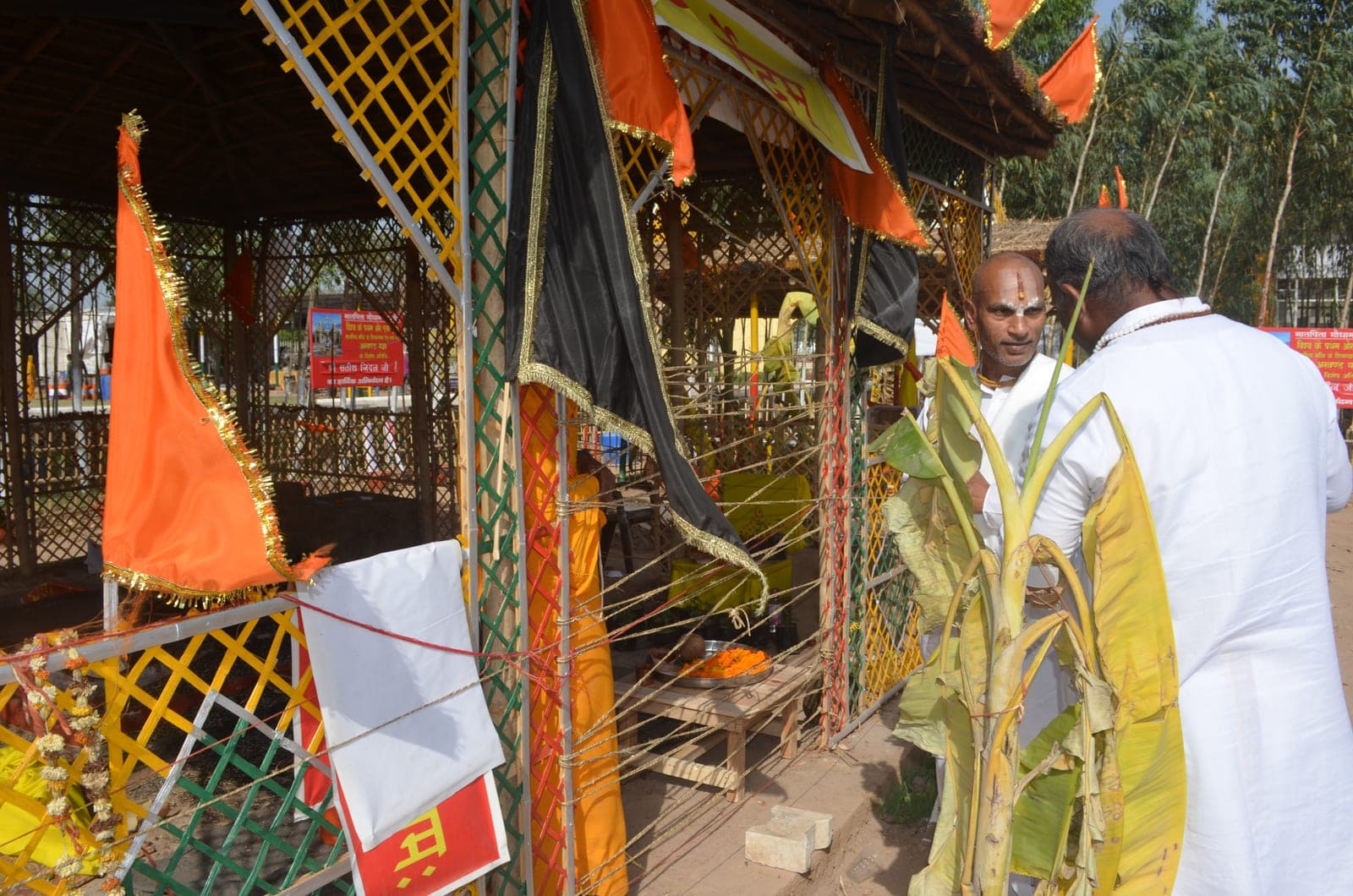
10 Apr 2019
Shilanyas of the Maat Pita Temple
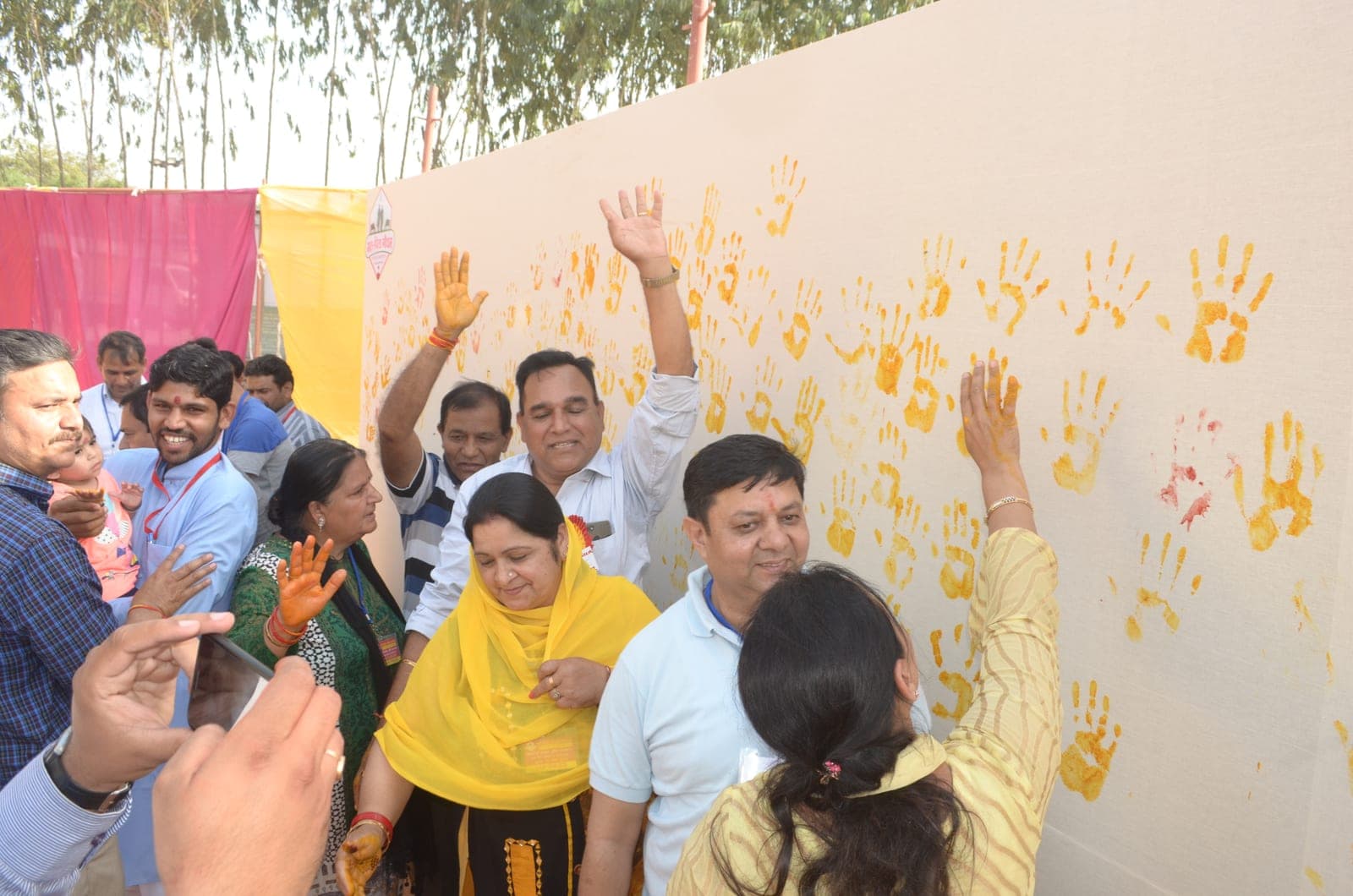
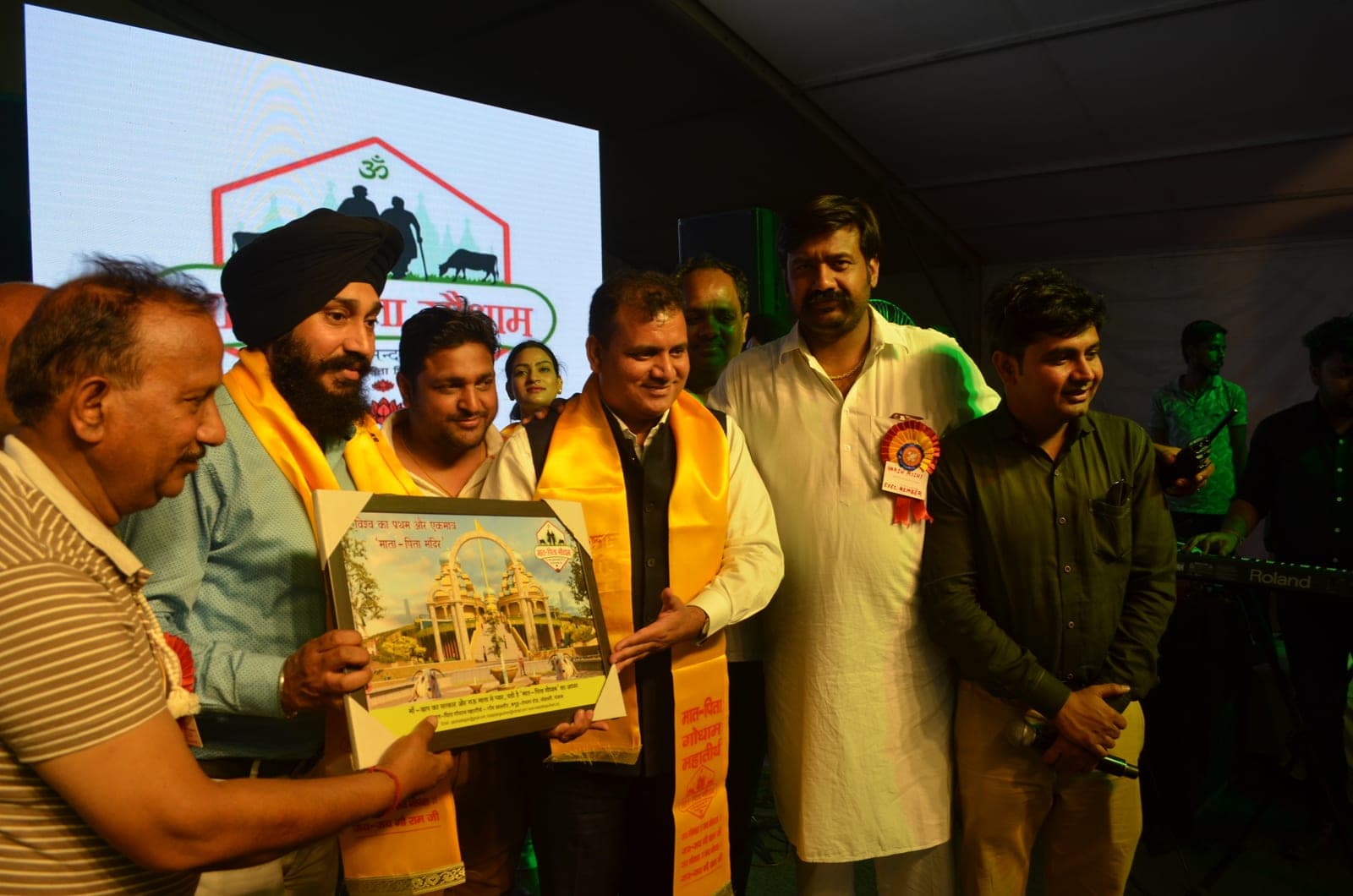
Foundation stone of the world's first idol-free temple laid across five days of Akhand Maat-Pita Yagg. Thousands of devotees attend.
Register a Sankalp for your parents
A Sankalp is a devotional commitment. On the date you choose, your parents' names are chanted at the Dham and appear on the Wall of Honor for that day.